

SÁBADO DAS TÊMPORAS DE SETEMBRO
Féria de 2ª Classe- Missa Própria
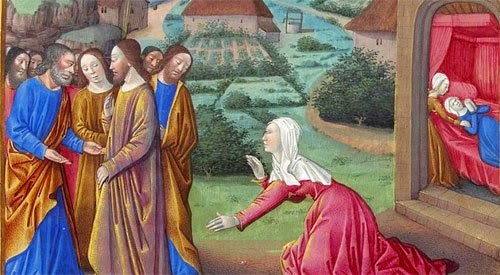
No dia 15 do sétimo mês do ano, os judeus celebravam a festa dos tabernáculos, precedida das expiações em que o Sumo Sacerdotes, havendo-se previamente purificado na fonte que esteve em frente ao santuário, penetrava com o sangue das vítimas no Santo dos santos e orava junto do propiciatório. O sábado das têmporas de Setembro, que outrora era o sétimo mês do ano, recorda esta dupla festa de penitência e alegria. Os profetas Miqueias, Zacarias e Daniel que se lê hoje, fala-nos do perdão que Deus nunca nega os que procuram lavar-se da mácula do pecado e imploram nas contingências, uma vez ou outra da vida, a sua proteção. A Epístola da missa de hoje (Heb. 9 2,12), mostra a nova aliança que Jesus estabeleceu entre Deus e as almas penitentes, oferecendo no verdadeiro Santo dos santos, quer dizer no Céu, o sangue fecundo que derramou no calvário. E o Evangelho de hoje (Lc 13,6-17), quer nos lembrar o milagre que o Senhor operou libertando aquela mulher das garras do demônio, diz bem os que são os sacerdotes no desempenho do seu altíssimo ministério. Por isso essa missa pode ser utilizada muito bem num dia de ordenações.
LEITURAS/LESSONS
I Leitura (Lv 23, 26-32)
Leitura do livro do Levítico.
O Senhor disse a Moisés: “No décimo dia do sétimo mês será o dia das Expiações. Tereis uma santa assembléia: humilhareis vossas, almas e oferecereis ao Senhor sacrifícios queimados pelo fogo. Não fareis trabalho algum naquele dia, porque é um dia de expiação em que deve ser feita a expiação por vós diante do Senhor, vosso Deus. Todo aquele que se não humilhar nesse dia será cortado do meio de seu povo. E todo o que fizer nesse dia um trabalho qualquer, eu o suprimirei do meio de seu povo. Não fareis, pois, trabalho algum; esta é uma lei perpétua para vossos descendentes, em todos os lugares em que habitardes. Será para vós um sábado, um dia de repouso, e humilhareis vossas almas. No nono dia do mês, à tarde observareis um sábado, de uma tarde à tarde seguinte.
II Leitura (Lv 23, 39-43)
Leitura do Livro do Levítico.
No décimo quinto dia do sétimo mês, quando tiverdes colhido os produtos da terra, celebrareis uma festa ao Senhor durante sete dias. O primeiro dia será um dia de repouso, bem como o oitavo. No primeiro dia tomareis frutos de árvores formosas, folhas de palmeiras, ramos de árvores frondosas e de salgueiros da torrente; e alegrar-vos-eis durante sete dias diante do Senhor, vosso Deus. Cada ano celebrareis esta festa durante sete dias em honra do Senhor. Esta é uma lei perpétua para vossos descendentes. Celebrá-la-eis no sétimo mês. Habitareis em barracas de ramos durante sete dias: todo homem da geração de Israel habitará em barracas de ramos, para que saibam os vossos descendentes que eu fiz habitar os israelitas em barracas de ramos, quando os tirei do Egito. Eu sou o Senhor, vosso Deus.”
III Leitura (Miquéias 7, 14,16; 18-20)
Leitura do Livro Miquéias.
Conduzi com o cajado o vosso povo, o rebanho de vossa herança que se encontra espalhado pelas brenhas, para o meio de vergéis; que ele paste como outrora em Basã e em Galaad. As nações os verão e sentirão vergonha de sua própria bravura; porão a mão na boca e seus ouvidos ficarão surdos; Qual é o Deus que, como vós, apaga a iniqüidade e perdoa o pecado do resto de seu povo, que não se ira para sempre porque prefere a misericórdia? Uma vez mais, tende piedade de nós! Esquecei as nossas faltas e jogai nossos pecados nas profundezas do mar! Mostrai a vossa fidelidade para com Jacó, e vossa piedade para com Abraão, como jurastes a nossos pais desde os tempos antigos!
IV Leitura (Zc 8, 14-19)
Leitura do Livro do Profeta Zacarias
Eis o que diz o Senhor dos exércitos: eu decidira fazer-vos mal quando vossos pais excitaram a minha cólera – diz o Senhor dos exércitos – e não voltei atrás! Assim, resolvo agora fazer o bem a Jerusalém e à casa de Judá. Não temais. Eis o que deveis fazer: falai a verdade uns aos outros; julgai às portas de vossas cidades segundo a justiça e a sinceridade. Não maquineis o mal em vossos corações contra o próximo; não jureis falso, porque aborreço tudo isso – oráculo do Senhor. A palavra do Senhor dos exércitos foi-me dirigida nestes termos: eis o que diz o Senhor, dos exércitos: o jejum do sexto mês como também os do quinto e do nono serão doravante para Judá dias de regozijo e de alegria, dias de festa.
V Leitura (Dn 3, 47-51)
Leitura do Profeta Daniel.
Então, as chamas, subindo a quarenta e nove côvados acima da fornalha, ultrapassaram a grade e queimaram os caldeus que se achavam perto. Mas o anjo do Senhor havia descido com Azarias e seus companheiros à fornalha e afastava o fogo. Fez do centro da fogueira como um lugar onde soprasse uma brisa matinal: o fogo nem mesmo os tocava, nem lhes fazia mal algum, nem lhes causava a menor dor. Então os três jovens elevaram suas vozes em uníssono para louvar, glorificar e bendizer a Deus dentro da fornalha, neste cântico:
Cântico (Dn 3, 52-56)
Sede bendito, Senhor Deus de nossos pais, digno de louvor e de eterna glória! Que seja bendito o vosso
santo nome glorioso, digno do mais alto louvor e de eterna exaltação!
Sede bendito no templo de vossa glória santa, digno do mais alto louvor e de eterna glória!
Sede bendito por penetrardes com o olhar os abismos, e por estardes sentado sobre os querubins, digno do
mais alto louvor e de eterna exaltação!
Sede bendito sobre vosso régio trono, digno do mais alto louvor e de eterna exaltação!
Sede bendito no firmamento dos céus, digno do mais alto louvor e de eterna glória!
Epístola (Heb 9, 2-12)
Leitura da Epístola de São Paulo Apóstolo aos Hebreus.
Irmãos: O primeiro tabernáculo que foi construído consistia numa tenda: a parte anterior encerrava o candelabro e a mesa com os pães da proposição; chamava-se Santo. Atrás do segundo véu achava-se a parte chamada Santo dos Santos. Aí estava o altar de ouro para os perfumes, e a Arca da Aliança coberta de ouro por todos os lados; dentro dela, a urna de ouro contendo o maná, a vara de Aarão que floresceu e as tábuas da aliança; em cima da arca, os querubins da glória estendendo a sombra de suas asas sobre o propiciatório. Mas não é aqui o lugar de falarmos destas coisas pormenorizadamente. Assim sendo, enquanto na primeira parte do tabernáculo entram continuamente os sacerdotes para desempenhar as funções, no segundo entra apenas o sumo sacerdote, somente uma vez ao ano, e ainda levando consigo o sangue para oferecer pelos seus próprios pecados e pelos do povo. Com o que significava o Espírito Santo que o caminho do Santo dos Santos ainda não estava livre, enquanto subsistisse o primeiro tabernáculo. Isto é também uma figura que se refere ao tempo presente, sinal de que os dons e sacrifícios que se ofereciam eram incapazes de justificar a consciência daquele que praticava o culto. Culto que consistia unicamente em comidas, bebidas e abluções diversas, ritos materiais que só podiam ter valor enquanto não fossem instituídos outros mais perfeitos. Porém, já veio Cristo, Sumo Sacerdote dos bens vindouros. E através de um tabernáculo mais excelente e mais perfeito, não construído por mãos humanas (isto é, não deste mundo), sem levar consigo o sangue de carneiros ou novilhos, mas com seu próprio sangue, entrou de uma vez por todas no santuário, adquirindo-nos uma redenção eterna.
Evangelho (Lc 13, 6-17)
Sequência do Santo Evangelho segundo Lucas.
Naquele tempo: Disse-lhes também esta comparação: Um homem havia plantado uma figueira na sua vinha, e, indo buscar fruto, não o achou. Disse ao viticultor: – Eis que três anos há que venho procurando fruto nesta figueira e não o acho. Corta-a; para que ainda ocupa inutilmente o terreno? Mas o viticultor respondeu: – Senhor, deixa-a ainda este ano; eu lhe cavarei em redor e lhe deitarei adubo. Talvez depois disto dê frutos. Caso contrário, cortá-la-ás. Estava Jesus ensinando na sinagoga em um sábado. Havia ali uma mulher que, havia dezoito anos, era possessa de um espírito que a detinha doente: andava curvada e não podia absolutamente erguer-se. Ao vê-la, Jesus a chamou e disse-lhe: Estás livre da tua doença. Impôs-lhe as mãos e no mesmo instante ela se endireitou, glorificando a Deus. Mas o chefe da sinagoga, indignado de ver que Jesus curava no sábado, disse ao povo: São seis os dias em que se deve trabalhar; vinde, pois, nestes dias para vos curar, mas não em dia de sábado. Hipócritas!, disse-lhes o Senhor. Não desamarra cada um de vós no sábado o seu boi ou o seu jumento da manjedoura, para os levar a beber? Esta filha de Abraão, que Satanás paralisava há dezoito anos, não devia ser livre desta prisão, em dia de sábado? Ao proferir estas palavras, todos os seus adversários se encheram de confusão, ao passo que todo o povo, à vista de todos os milagres que ele realizava, se entusiasmava.
In English
I Lesson (Lv 23, 26-32)
Lesson the Book of Leviticus.
The Lord said to Moses, “On the tenth day of the seventh month is the Day of Atonement. Hold a sacred assembly, humilhareis your souls and offer sacrifices to the Lord by fire. You shall not do any work that day, because it is a day of atonement in which atonement must be made by you before the Lord your God. Everyone who is not humble on that day will be cut off from among his people. And all you do on that day any job, I suprimirei from among his people. Ye shall not therefore any work; this is a perpetual law for your generations in all places where dwell. It shall be to you a Saturday, a day of rest, and humilhareis your souls. On the ninth day of the month, the afternoon will observe a Saturday, an afternoon next afternoon.
II Lesson (Leviticus 23: 39-43)
Lesson the Book of Leviticus.
On the fifteenth day of the seventh month, when you have harvested the produce of the land, celebrate a feast to the Lord for seven days. The first day will be a day of rest, and the eighth. On the first day ye shall take goodly fruit of trees, branches of palm trees, boughs of leafy trees and willows of the stream; and ye shall rejoice for seven days before the Lord your God. Each year a feast for seven days in honor of the Lord. This is a perpetual law for your descendants. Celebrate it here in the seventh month. Dwell in tents branches for seven days: every man’s generation of Israel dwell in booths of branches, so they know your descendants I did the Israelites dwell in booths of branches, when I brought them out of Egypt. I am the Lord your God. ”
III Lesson (Micah 7, 14,16, 18-20)
Reading the Book Micah.
Conducted with the staff your people, the flock of your inheritance, which is spread through the thickets, to the middle of orchards; paste it as once in Bashan and Gilead. The nations will see and feel ashamed of their own bravery; hold your hand in the mouth and their ears shall be deaf; What is the God who, like you, erases iniquity and forgive the sin of the remnant of his people, who do not anger for ever because he prefers mercy? Again, have mercy on us! Forget our faults and cast the sins into the depths of the sea! Prove your loyalty to Jacob and your mercy to Abraham, as sworn to our fathers from ancient times!
IV Lesson (Zach 8, 14-19)
Lesson from the Book of the Prophet Zechariah
Thus saith the Lord of hosts: I decided to do you evil when your fathers excited my anger – says the Lord of hosts – and no I’m back! So, I decide now to do good to Jerusalem and to the house of Judah. Do not fear. Here’s what you should do: speak the truth to each other; judge at the gates of your cities according to justice and sincerity. Maquineis not evil in your hearts against his neighbor; not false swear, because I hate all this – says the Lord. The word of the LORD of hosts came to me in these terms: thus saith the Lord of hosts: The fast of the sixth month as well as the fifth and the ninth will now Judah days of rejoicing and joy, feast days .
V Lesson (Daniel 3, 47-51)
Lesson of the Prophet Daniel.
Then the flames, up to forty-nine cubits above the furnace, surpassed the grid and burnt the Chaldeans who were near. But the angel of the Lord had come down with Azarias and his companions into the furnace and away from the fire. Made of the fire center as a place where blew a morning breeze: the fire even touched them, nor did them any harm, or caused them any pain. Then the three young men raised their voices in unison to praise, glorify and bless God in the furnace, this song:
Canticle (Daniel 3, 52-56)
Blessed be the Lord God of our fathers, praiseworthy and eternal glory! May it be blessed your
holy glorious name, worthy of the highest praise and eternal exaltation!
Blessed be the temple of your holy glory, worthy of the highest praise and eternal glory!
Be blessed by penetrardes to look the depths, and for you are sitting on the cherubim, worthy of
highest praise and eternal exaltation!
Blessed be on your royal throne, worthy of the highest praise and eternal exaltation!
Blessed be the firmament of heaven, worthy of the highest praise and eternal glory!
Epistle (Heb 9, 2-12)
Lesson from the Epistle of St. Paul the Apostle to the Hebrews.
Brothers: The first tabernacle was built consisted of a tent: the front closed the chandelier and the table with the bread; He called the Holy. Behind the second veil thought that part called the Holy of Holies. Here was the golden altar for the perfumes, and the ark of the covenant covered with gold on all sides; within it, the golden urn containing the manna, Aaron’s rod that budded and the tablets of the covenant; on the ark, the cherubim of glory extending the shadow of his wings over the mercy seat. But it is not the place to speak of these things in detail. Thus, while the first part of the tabernacle continually enter the priests to perform the duties, enters the second only the high priest only once a year, and taking even with the blood to provide for their own sins and those of the people. What it meant the Holy Spirit that the way the Holy of Holies was not yet free, while subsist the first tabernacle. This is also a figure that refers to the present time, indicating that the gifts and sacrifices that were offered were unable to justify the consciousness of who practiced the cult. Worship which consisted solely of food, drink and various ablutions, materials rites that could only have value until they were established more perfect. However, it has come Christ the High Priest of good things to come. And through a more excellent tabernacle and more perfect, not built by human hands (that is, not of this world), without taking with him the blood of goats and calves but with his own blood, entered once for all into the sanctuary, getting us eternal redemption.
Gospel (Luke 13: 6-17)
Sequência the Holy Gospel according to Luke.
At that time: also told them this parable: A man had a fig tree planted in his vineyard, and fetching fruit, found none. Said the grower: – Behold, three years ago I have been looking for fruit on this fig tree and find none. Cut it off; so still uselessly occupies the ground? But the winegrower said – Lord, let it alone this year; I’ll dig around it and you’ll lay fertilizer. Maybe then it will bear fruit. Otherwise, cut it ace. Jesus was teaching in the synagogue on a Saturday. There was a woman who was eighteen, was possessed by a spirit that held ill: was bowed together and could not quite get up. On seeing her, Jesus called her and said to her: You are free from your disease. He laid his hands and immediately she straightened up, glorifying God. But the ruler of the synagogue, indignant because Jesus had healed on the Sabbath, said to the people, There are six days in which to work; therefore come these days to cure you, but not on the Sabbath. Hypocrites !, told them the Lord. Do not untie each one of you on the Sabbath his ox or his ass from the manger, to take them to drink? This daughter of Abraham, Satan paralyzed eighteen years, should not be free from this prison on the Sabbath? By uttering these words, all his adversaries were filled with confusion, while all the people in the sight of all the miracles he performed, was enthusiastic.
 Irmandade Nossa Senhora do Carmo